
Modeling Agritourism Entrepreneurship
What Europe and Oceania Can Learn from Each Other
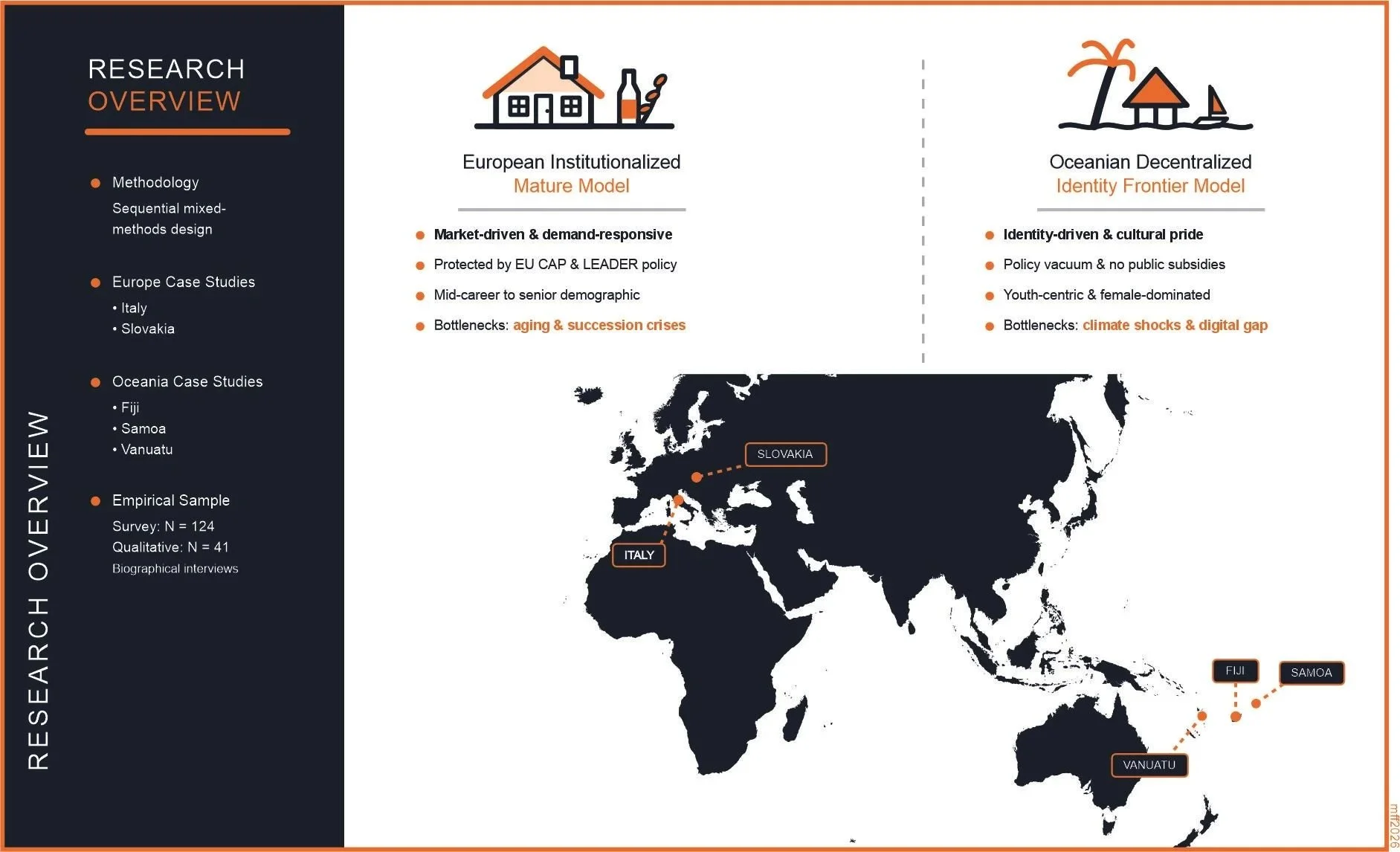
What does an agritourism entrepreneur look like today? What motivates people to develop agritourism activities, what challenges do they face, and which skills do they need to make their businesses sustainable? These questions are at the heart of the AGRI-TOUR research activities. Following the joint research carried out across Europe and the Pacific, the project has reached an important scientific milestone: the results have been published in the peer-reviewed journal Societies. The article, “Modeling Agritourism Entrepreneurship: A Comparative Analysis of Operational Profiles, Constraints, and Capacity Gaps Across Europe and Oceania,” provides a comparative analysis of agritourism entrepreneurship across two very different regional contexts. Published on 28 September 2026, the study brings together researchers from AGRI-TOUR partner institutions in Europe, Fiji, Samoa and Vanuatu.
Looking at agritourism from the operators’ perspective
Much of the existing discussion on rural and agritourism focuses on tourists: what they expect, why they travel, and what kinds of experiences they seek. This research shifts attention to the supply side — the people who create and operate agritourism experiences. Using a sequential mixed-methods approach across Europe and Oceania, the study explores who agritourism entrepreneurs are, how their businesses operate, what motivates them, which constraints they encounter, and where important capacity and training gaps remain. This perspective is particularly important because agritourism requires entrepreneurs to combine skills from several different fields. Farmers and rural operators increasingly need to integrate agricultural knowledge with hospitality, education, recreation, direct product sales, marketing, digital communication and environmental management.
Two regions, two different agritourism models
One of the key findings of the study is that agritourism entrepreneurship does not follow a single universal model. The research identifies two contrasting configurations.
Europe: An Institutionalized Mature Model
European agritourism operates within a relatively mature and institutionalised environment. It is strongly connected with established markets, public policies, rural development mechanisms and territorial quality systems. European farms have progressively expanded beyond agricultural production towards multifunctional activities including hospitality, gastronomy and other visitor experiences. Public frameworks such as the Common Agricultural Policy and LEADER have also contributed to this development. At the same time, maturity creates its own challenges. The study highlights issues connected with an ageing operator population and generational succession, while identifying the need for more specialised competencies in areas such as environmental and social agriculture.
Oceania: A Decentralized Identity Frontier
The Oceanian model presents a very different picture. The research identifies a younger and strongly female-represented entrepreneurial environment, where agritourism is closely connected with cultural identity, local resilience and the realities of Small Island Developing States. Unlike the more institutionalised European environment, operators in Oceania often work with limited policy support while facing significant exposure to climate variability and economic vulnerability. Agritourism can therefore play an important role in diversifying rural and island economies while creating new opportunities to valorise agriculture, traditional food systems and local cultural practices.
Different contexts create different capacity gaps
The comparison also shows why training programmes cannot simply transfer one regional model to another. In Europe, the study identifies a need for advanced and specialised competencies, particularly in environmental and social dimensions of agriculture. In Oceania, the most pressing gaps are more foundational and business-oriented. They include financial risk management, regulatory compliance and direct-to-consumer digital infrastructure. These differences are highly relevant for AGRI-TOUR. They demonstrate that strengthening agritourism in Pacific Island Countries requires training that responds to the actual operating environment of local entrepreneurs instead of simply reproducing European approaches.
Agritourism as a bridge between agriculture and the experience economy
Across both regions, however, one common pattern emerges. Modern agritourism entrepreneurs operate at the intersection of agriculture and tourism. They must transform agricultural resources, landscapes, food, knowledge and cultural heritage into meaningful visitor experiences while maintaining viable businesses. This creates a hybrid professional profile combining agriculture with hospitality, recreation, education, entertainment and direct product sales. Digital visibility and demonstrable environmental responsibility are also becoming increasingly important for remaining competitive in the contemporary experience economy. The challenge is therefore not simply to create more agritourism businesses, but to provide operators with the skills, knowledge and institutional environment needed to develop them sustainably.
From research to AGRI-TOUR action
The publication represents an important scientific output of the AGRI-TOUR research conducted under D2.2 – Scientific Research on the Empowerment of Agritourism in the Pacific Ocean. Its findings also provide an evidence base for the next stages of the project. The capacity gaps identified through the research can inform the development of educational content, digital learning activities and practical training pathways within AGRI-TOUR. In this way, the research creates a direct connection between scientific evidence, education and practice: understanding the realities of agritourism entrepreneurs helps the project develop learning opportunities that respond to the actual needs of rural and island communities.
Scientific publication
Fontefrancesco, M. F., Pili, M., Kader, M. A., Gabriel, T. I., Lako, J., Palkova, Z., Singh, G., Imo-Seuoti, T., Ubaub, L. T., Vandeputte, L., Vitale, I. V., & Zitnak, M. (2026). Modeling Agritourism Entrepreneurship: A Comparative Analysis of Operational Profiles, Constraints, and Capacity Gaps Across Europe and Oceania.
Societies, 16, 311. DOI: 10.3390/soc16100311
Rural Tourism in Europe and Oceania: a Concise Narrative Review
Introduction
The contemporary global tourism landscape is undergoing a profound structural transformation, characterized by a departure from linear, rational decision-making models toward complex, multifactorial processes driven by emotional and experiential imperatives. As the flaws of traditional mass tourism—such as environmental degradation, over-tourism, and the erosion of cultural identities—become increasingly apparent, rural tourism has emerged not merely as a residual category, but as a primary alternative aligned with modern ideals of sustainability and individual well-being. This shift represents a transition from a "surfing" modality, defined by superficial observation, to a "diving" modality, where travelers seek immersive integration with local cultures and communities.
This article analyzes the evolution of rural tourism through a comparative lens, examining the distinct developmental trajectories of Europe and Oceania. While Europe represents the "First Comer," a mature model shaped by institutional support and heritage preservation, Oceania stands as the "New Frontier," where development is fueled by market-driven resilience and the management of vast wilderness. Despite these structural divergences, both regions are converging on shared imperatives: the need for "eco-effectiveness," the valorization of gastronomy, and the urgent requirement for digital and professional upskilling among operators.
Authenticity and the Experience Economy
The post-modern tourist is increasingly moving away from standardized, "off-the-shelf" packages in favor of personalized, flexible itineraries that allow for deep engagement with destinations. This evolution creates a specific demand for locations "off the beaten path," rejecting the homogenization of mass tourism for unique, less crowded environments that offer a sense of discovery. In this context, the rural landscape functions not as a passive backdrop but as an active element of a therapeutic experience, satisfying the growing "wellness wave" that prioritizes mental health and disconnection from urban stress.
Rural tourism answers this demand by facilitating direct interaction with host communities and fostering the preservation of local heritage. It creates a space for "lifestyle entrepreneurship," where small enterprises engage deeply with sustainable practices to build community resilience. However, the modern traveler’s quest for seclusion is paradoxically coupled with a desire for "instagrammable" moments; digital inspiration plays a critical role, as tourists seek aesthetic authenticity to fuel their social narratives. Consequently, perceived authenticity has become a primary driver of loyalty in rural tourism, necessitating that operators curate narratives that blend atmosphere, service, and local heritage.
Terroir as a Cultural Bridge
A pivotal element in the contemporary appeal of rural tourism is the role of food and gastronomy. There is a strict relationship between the growth of food and wine tourism and the rediscovery of rurality by urbanized societies. Food has transcended its role as sustenance to become a central motivation for travel, allowing tourists to engage with the terroir—the profound connection between food, culture, and place.
This synergy transforms the rural landscape into a "gastronomic deposit" to be explored, where the consumption of local products serves as a cultural bridge between guest and host. The motivations driving this sector are multidimensional, encompassing the physical pleasure of tasting, the cultural understanding of new flavors, and the status-related distinction of consuming high-quality local products. Whether through the "gastronaut" who focuses intensely on the asset or the "foodtrotter" who integrates food into broader cultural discovery, rural tourism has become a sophisticated expression of lifestyle. However, as the sector expands, there is a risk that rural culinary culture may be commodified into a static "museum piece," requiring sophisticated training to valorize heritage without reducing it to a stereotype.
Europe as the "First Comer"
Europe remains the mature epicenter of global tourism, where rural tourism has evolved from a niche alternative into a strategic pillar of regional resilience. The European model is heavily institutionalized, tracing its origins to policy tools designed to combat rural depopulation and diversify farm incomes in the face of industrialization. Today, it is characterized by "multifunctionality," where farms are viewed as custodians of culture, landscape, and biodiversity, supported by frameworks such as the European Union’s Common Agricultural Policy (CAP) and the LEADER program.
The European sector is defined by its integration into high-density cultural landscapes where history and agriculture are inextricably linked. A central pillar is the strict valorization of terroir through Protected Geographical Indication (PGI) designations, which differentiate destinations in a competitive global market. Economically, the sector is substantial, with agritourism contributing approximately 12 billion euros to rural economies.
However, the European model faces specific challenges related to its density. A primary concern is "over-tourism," where high visitor numbers threaten to degrade the quietude and landscape tourists seek. Consequently, the sector is shifting toward "eco-effectiveness," a concept that moves beyond simple conservation to ensuring tourism actively heals the landscape and operates within social carrying capacities. Furthermore, an aging population of operators creates a crisis of continuity, necessitating urgent generational renewal and upskilling in digital literacy.
Oceania as the "New Frontier"
In contrast to Europe, the tourism landscape in Oceania—dominated by Australia and New Zealand—is experiencing a paradigm shift from a focus on distance and isolation to becoming a "New Frontier" for the experience economy. The Oceanian model is not policy-driven but market-driven, born from the necessity of economic diversification in the face of volatile commodity markets and climate risk. For farmers in this region, agritourism serves as a crucial economic buffer against the whims of global markets.
This model is defined by "scale and wilderness," utilizing large-scale sheep and cattle stations to attract visitors seeking isolation and adventure. The visitor experience is structurally distinct from the manicured European model; it often involves high-adventure activities or "glamping" on remote stations accessible only by light aircraft. Indigenous tourism also plays a critical role, with Māori and Aboriginal communities using storytelling to interpret the physical landscape through spiritual and cultural lenses.
The primary constraint for the Pacific model is resource scarcity, specifically water, rather than crowding. Tourism significantly influences water consumption, creating potential conflicts in drought-prone agricultural regions. To mitigate this, the sector is adopting high-value, low-volume strategies that maximize revenue while minimizing the physical footprint on fragile ecosystems.
Operational Imperatives
Despite their structural differences, both regions face shared operational challenges that threaten long-term viability: the "digital imperative" and the need for "green competence."
The Digital Imperative Rural geosystems are rapidly entering a "smartphone world," where the accessibility and quality of digital interfaces directly correlate with destination selection. However, a significant competence gap exists; operators in both Europe and Oceania often lack the advanced digital literacy required to market directly to consumers and bypass extractive intermediaries. In Europe, this is often a demographic issue due to an aging workforce, while in the Pacific, it is exacerbated by extreme geographic isolation. Without "smart" tourism tools, the authentic experiences these regions offer remain invisible to the high-value global market.
Green Competence and Eco-Effectiveness While sustainability is a core demand, operators must move beyond vague green claims to demonstrable ecological stewardship. The globalization of tourism has intensified the link between travel and carbon emissions, necessitating specific green strategies to maintain legitimacy. This requires technical skills in measuring and mitigating impacts—such as calculating ecological footprints and managing water resources—which are currently scarce among traditional rural entrepreneurs. True sustainability requires a harmonization between green motives and business strategies, ensuring that environmental policies are deeply embedded in business models rather than treated as superficial marketing add-ons.
Conclusion
The comparative analysis of rural tourism in Europe and the Pacific illustrates how distinct historical and geographical contexts produce divergent structural models that nonetheless converge on shared global goals. Whether driven by the policy mandates of the "First Comer" or the market resilience of the "New Frontier," rural tourism has evolved into a sophisticated sector vital for regional development.
The future of the sector depends on professionalization. European stakeholders must focus on preventing the commodification of heritage and managing visitor density through "eco-effectiveness," while Oceanian operators must prioritize disaster resilience and water security. Ultimately, for rural tourism to transition from a niche activity to a regenerative economic pillar, it must bridge the gaps in digital literacy and environmental competence, ensuring that the "experience economy" benefits both the modern traveler and the host community.
Michele F. Fontefrancesco, Martina Pili
Università Cattolica del Sacro Cuore
Essential Bibliography
Fontefrancesco, M., Boscolo, A., & Zocchi, D. (2023). Rural culinary tourism in southern Europe: emerging educational needs of a growing sector. Tourism and Hospitality, 4(2), 293-306.
Narayan, P., Narayan, S., Prasad, A., & Prasad, B. (2010). Tourism and economic growth: a panel data analysis for Pacific Island countries. Tourism Economics, 16(1), 169-183.
Saverimuttu, V., & Varua, M. (2014). Promoting sustainable tourism in the Pacific Forum Island Countries. Sustainable Tourism VI, 1, 27-38.
Lo Verde, F. M., Corvo, P. & Pepe V. (Eds.), Sociologia dei consumi turistici (pp. 157–193). Pearson.
Voda, M., Moldovan, L., & Torpan, A. (2022). Rural geosystems’ future in the smartphone world: the inception of Romanian tourist sites. Sustainability, 14(15), 9652.
Voices from the Field: Agritourism Operators
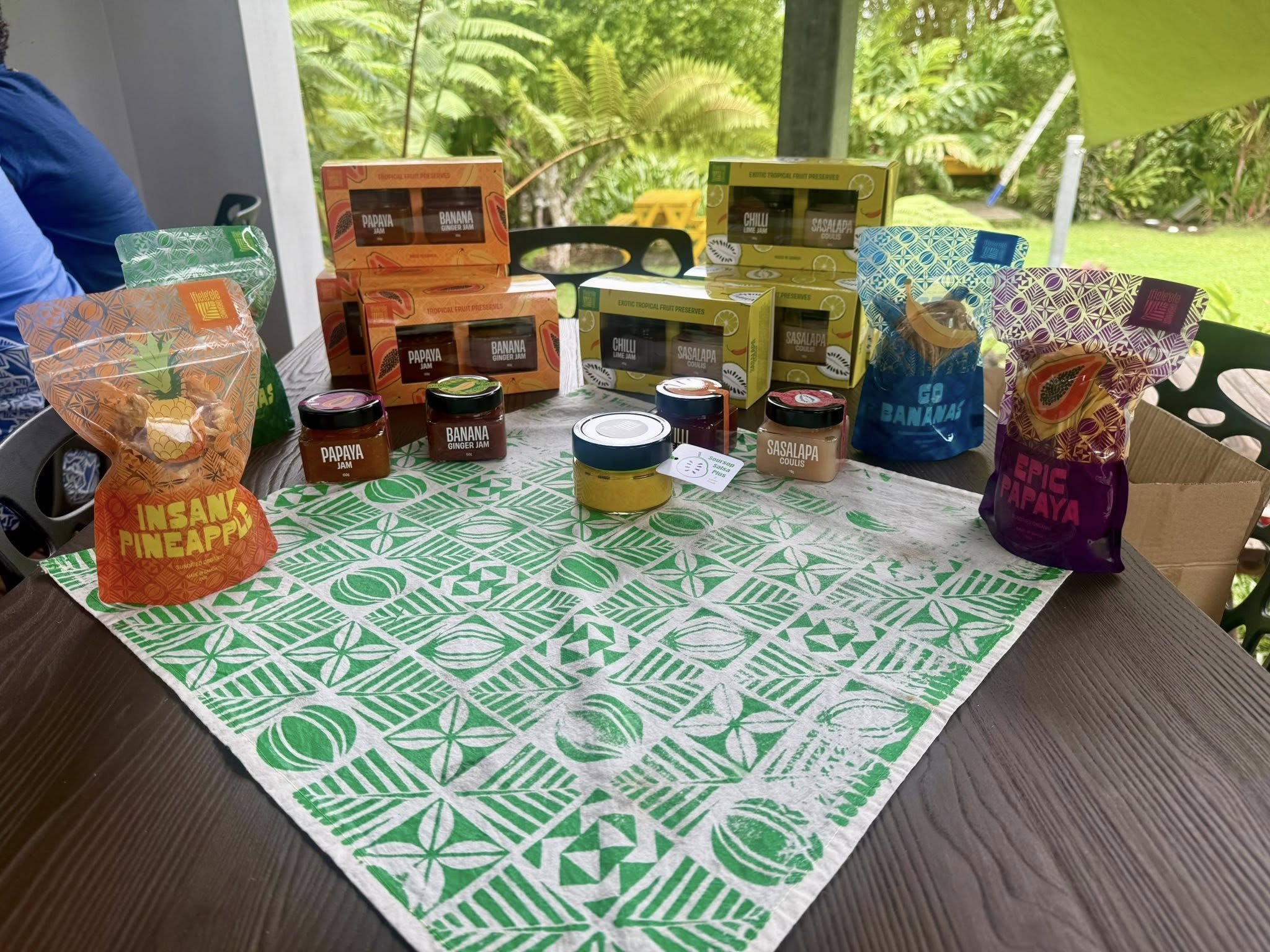
Agritourism is often discussed through strategies, policies, and development frameworks. But at its core, it is shaped by people who live and work in rural areas every day. As part of the Agri Tour project, we engaged directly with agritourism operators from Europe and the Pacific region to better understand how they perceive their role, how their services are evolving, and how they imagine the future of agritourism in their communities.
This blog post shares key insights emerging from a large-scale survey conducted among agritourism and agri-food tourism operators across partner countries. Rather than presenting statistics, it offers a qualitative snapshot of recurring themes and narratives that emerged from the field.
Agritourism as a living, evolving practice
Across regions, operators described agritourism not as a fixed business model, but as a living practice that evolves over time. Many began with a limited offer—often accommodation, local food, or basic farm visits—and gradually expanded their services in response to visitor expectations, personal motivations, and changing rural realities.
Operators spoke about adding educational activities, nature-based experiences, cultural events, or new forms of hospitality as a way to diversify income, but also to remain authentic and connected to their local environment. For many, innovation did not mean radical transformation, but rather small, incremental adaptations that respect local traditions and available resources.
Motivation beyond profit
One of the strongest messages emerging from operators’ responses is that agritourism is rarely driven by economic motivation alone. While financial sustainability is essential, operators repeatedly referred to personal values, attachment to place, and responsibility toward their community as central drivers of their work.
Many see agritourism as a way to keep rural areas alive, to pass knowledge to younger generations, and to create meaningful encounters between visitors and local life. Environmental awareness and respect for cultural heritage are often embedded in business decisions, even when they are not formally labelled as “sustainability strategies.”
Responding to changing visitor expectations
Operators are acutely aware that visitor expectations are changing. Younger tourists, families, and international visitors are increasingly looking for experiences that are authentic, educational, and emotionally engaging. Operators mentioned growing interest in hands-on activities, local food systems, digital detox, and community interaction.
At the same time, operators highlighted the tension between rural life and tourist demand. While visitors seek comfort and accessibility, rural contexts are shaped by seasonality, limited infrastructure, and the rhythms of agricultural work. Navigating this balance remains one of the key challenges in shaping agritourism services.
Challenges on the ground
When reflecting on challenges, operators across regions pointed to similar constraints. Limited investment capacity, lack of trained staff, difficulties in promotion and digital visibility, and strong seasonality were frequently mentioned. In more remote or island contexts, these challenges are often compounded by geographic isolation and climate-related pressures.
Despite these obstacles, operators expressed a strong willingness to adapt, learn, and collaborate—provided that support mechanisms, training opportunities, and realistic development pathways are available.
Imagining the future of agritourism
Looking ahead, operators tend to imagine agritourism as becoming more ecological, more community-based, and more closely linked to local food systems. Digital tools are increasingly recognised as necessary, particularly for visibility and communication, although many operators feel they lack the skills or time to fully exploit them.
Importantly, agritourism is often seen as an opportunity for youth engagement—either by attracting young visitors or by creating new professional pathways in rural areas. This forward-looking perspective highlights the potential of agritourism as a bridge between tradition and innovation.
From operators’ voices to project action
The insights shared by agritourism operators form a crucial foundation for the next phases of the AGRI-TOUR project. Their perspectives directly inform the design of the project’s digital learning activities (WP3) and the internship framework (WP4), ensuring that future training and mobility pathways respond to real needs and realities on the ground.
By listening closely to those who operate agritourism services every day, the project aims to support a form of rural tourism that is not only economically viable, but also socially meaningful, culturally respectful, and environmentally responsible.
Empowering Agritourism in the Pacific
It All Begins Here
Agritourism is increasingly recognised as a powerful driver of sustainable rural development, especially in regions where agriculture, culture, and community life are deeply interconnected. As part of the AGRI-TOUR project, we conducted an extensive scientific research study to better understand how agritourism can empower individuals, communities, and rural economies across the Pacific Ocean region.
This research represents a key deliverable of Work Package 2 (WP2) and forms the evidence base for the educational and practical activities developed later in the project.
Why this research matters
Agritourism is more than a tourism niche. It has the potential to foster personal growth, community resilience, environmental responsibility, and cultural continuity. However, to unlock this potential, it is essential to understand how agritourism is perceived, experienced, and shaped by those who consume it and those who deliver it.
The core objective of the research was therefore to explore the empowerment potential of agritourism through four key dimensions:
personal empowerment,
social empowerment,
environmental and cultural sustainability,
and the gap between research and real-world practice.
A large-scale, participatory research approach
The study was designed as a multi-country, mixed-method research involving a total of 400 participants from AGRI-TOUR partner countries.
Two key stakeholder groups were included:
200 young people (aged 18–30) studying agriculture, tourism or gastronomy, representing the future generation of tourists and professionals;
200 agri-food and tourism workers, representing the supply side of agritourism and current rural business practices.
Each project partner contributed 50 respondents, ensuring balanced geographical representation and strong partner involvement in data collection.
Exploring both demand and supply perspectives
To capture both expectations and realities, the research adopted a two-phase design.
The first phase consisted of a structured survey addressed to both students and operators. While part of the questionnaire was shared, allowing for direct comparison between demand and supply, each group also responded to tailored sections reflecting their specific roles.
Students were asked about their recent experiences with rural tourism, their motivations, values, expectations, and future aspirations related to agritourism. Operators, on the other hand, reflected on the services they currently offer, how their businesses have evolved, what motivates innovation, and which challenges they face in meeting tourists’ expectations.
This approach allowed the research team to identify alignments and mismatches between what young people seek in agritourism experiences and what rural providers are currently able or willing to offer.
Going deeper: stories behind the data
The second phase of the research focused on in-depth qualitative interviews with a selected group of respondents from both categories. These semi-structured interviews explored personal biographies, motivations, values, and future visions related to agritourism.
For students, interviews traced how tourism preferences evolve over time and how rural spaces are emotionally and symbolically perceived. For operators, interviews documented the stories behind agritourism businesses — their origins, challenges, adaptations, and aspirations.
These narratives added depth and context to the quantitative findings, revealing agritourism not only as an economic activity, but as a space of identity, learning, and social innovation.
From research to action
The results of this research do not remain theoretical. They directly inform the design of the AGRI-TOUR Digital Course (WP3) and the Internship Protocol (WP4), ensuring that training content and practical pathways are grounded in real needs, expectations, and lived experiences across the Pacific region.
The scientific results of the research have been published in the peer-reviewed journal Societies. The article “Modeling Agritourism Entrepreneurship: A Comparative Analysis of Operational Profiles, Constraints, and Capacity Gaps Across Europe and Oceania” presents a comparative analysis of agritourism entrepreneurship and capacity needs across the two regions.
Building empowered, sustainable agritourism futures
By listening to over 400 voices from education and practice, this research lays the foundation for a more inclusive, resilient, and empowering agritourism sector in the Pacific Ocean region. It highlights agritourism as a bridge between tradition and innovation, education and entrepreneurship, and local communities and global sustainability goals.